BH1 Accounting

Accounting Software

Smart Business Systems for London SMEs

Quickbooks, Xero, FreeAgent, and other systems only work as well as they are set up. We help small businesses configure them for maximum performance. And for everything off-the-shelf tools cannot do, our smarter cloud systems can step in: Enjoy benefits like convenient data processing through simple snapshots of your receipts, real-time tax-positioning, or early compliance risk flagging.

Accounting software support for small medium businesses London UK

Accounting software:

When businesses outgrow their tools and need expert support

Many SME owners start with tools like Xero, QuickBooks, or FreeAgent, expecting them to “do the accounting.” But while these platforms can be a user-friendly help at the start of entrepreneurial careers, they only work as well as the data behind them and aiming to replace experience can be costly considering how complex processing your records can be.

Common issues include uncategorised transactions, duplicate entries, incorrect VAT codes, or integrations that never quite sync. Furthermore, some features go unused, reports are pulled but not interpreted, and you might still be wondering what to do with the data once you have it. At the same time, growing businesses often hit a ceiling with off-the-shelf tools. What begins as simple bookkeeping becomes complex with multiple income streams, staff, foreign transactions, or advanced tax planning.

Facing similar issues? Let us know where you currently stand with your system and we can optimise your set-up or upgrade your accounting with our own cloud-based systems.

FAQ

What are the most common misconfigurations in accounting software?

There are several recurring setup mistakes that we see in platforms like Xero, QuickBooks, or FreeAgent – and many of them go unnoticed until they cause reporting errors, tax misstatements, or compliance issues.

One of the most common is an incorrectly structured chart of accounts. Oftentimes, it is too generic, missing key categories, or duplicating entries unnecessarily. This leads to misleading reports and poor cost tracking. Instead, your chart of account is best when it is tailored to the nature of your business – which we can make sure of.

Another frequent issue involves bank feed configuration. If reconciliation rules are missing or improperly set, transactions are duplicated, skipped, or mismatched. This leads to inaccurate balances and overstated income. 

We also see incorrect use of journals (which we generally do not recommend non-professionals to prepare on their own), manually posted payroll entries without PAYE reconciliation, and unlinked expense accounts that do not reflect actual payments.

These misconfigurations do not always cause immediate problems. But over time, they distort your numbers, delay decision-making, and can trigger harsh HMRC penalties. As part of our accounting software support for small to medium sized businesses, we perform full system reviews to detect and fix such errors. However, the complexity of your business operations might exceed the abilities of your system at some point. In such cases, we recommend working with professional accountants.
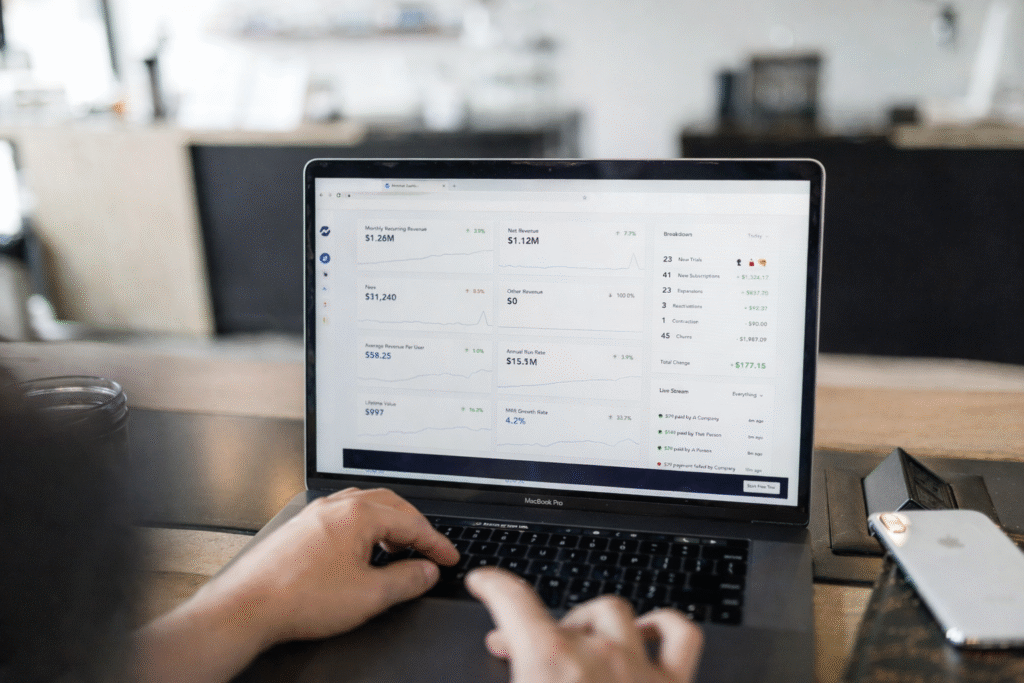
What are the limitations of standard accounting software, and the penalties for mistakes?

You should keep in mind that these tools rely entirely on the quality of the data entered and the logic applied by the user (you). If misconfigured, they can lead to serious compliance oversights. In other words: if you are not a professional accountant yourself, there is always going to be a risk that you receive penalties by HMRC despite using software since it takes accounting expertise to know what data must be fed and how it must be configured for compliance.

For example, such software cannot assess whether an expense is genuinely allowable for tax purposes, nor will it alert you if a withdrawal made by a director creates a director loan imbalance. It will not calculate the optimal timing for VAT registration, nor warn you if you are about to miss a Corporation Tax deadline. It cannot adjust for accruals, capital allowances or tax planning strategies – unless guided by an expert.

Many SME owners fail to see this, which is why errors stemming from over-reliance on software are on the rise. And they are costly: common consequences are late VAT returns (penalties and surcharges of up to 15% of the VAT owed), underpayment of Corporation Tax (fines of up to 30% of the unpaid amount), and inaccurate PAYE filings (monthly penalties starting from £100, depending on staff numbers).

At BH1 Accounting, it is our purpose to close these gaps with our accounting software support for small to medium sized businesses. We ensure that your system is accurate and that behind every submission stands a real accountant who understands what the numbers truly mean.

Do I have to switch systems to work with you?

No, you do not. We support businesses using Xero, QuickBooks, FreeAgent, and other software. Our goal is not to make you change tools, but to make your existing system work better. 

Many small businesses prefer to stay with familiar platforms, and we respect that. What matters most is whether the system is set up correctly and used in a way that produces clean, compliant and decision-ready financial data.

If your current setup is already functioning well, we will work within it. If we identify gaps such as incorrect VAT treatment, structural inconsistencies, or lack of reporting clarity, we can improve the system without disrupting your team. However, the door to our own cloud-based solution will always remain open for you. 

Can you help me switch from a simple Excel spreadsheet to accounting software?

Absolutely. Many small businesses start with spreadsheets because they are free and familiar. But eventually, they become error-prone, hard to share, and inefficient. However, you should see switching to a proper accounting system as a business improvement and an indicator of your entrepreneurial progress. So, congrats on reaching this point! 

From here, we help you choose the right platform (based on your business model, budget, and team), structure your chart of accounts, import historic data, and ensure everything is mapped correctly from the start. Or we simply stay with you as your chartered accountants and take care of everything, which is even more convenient as it comes with the benefits of our professional systems.

What does a professional accountant’s software setup look like?

Generally speaking, we use mainstream accounting software for producing ledgers. However, we use software for professionals for tasks such as payroll and tax filings.